

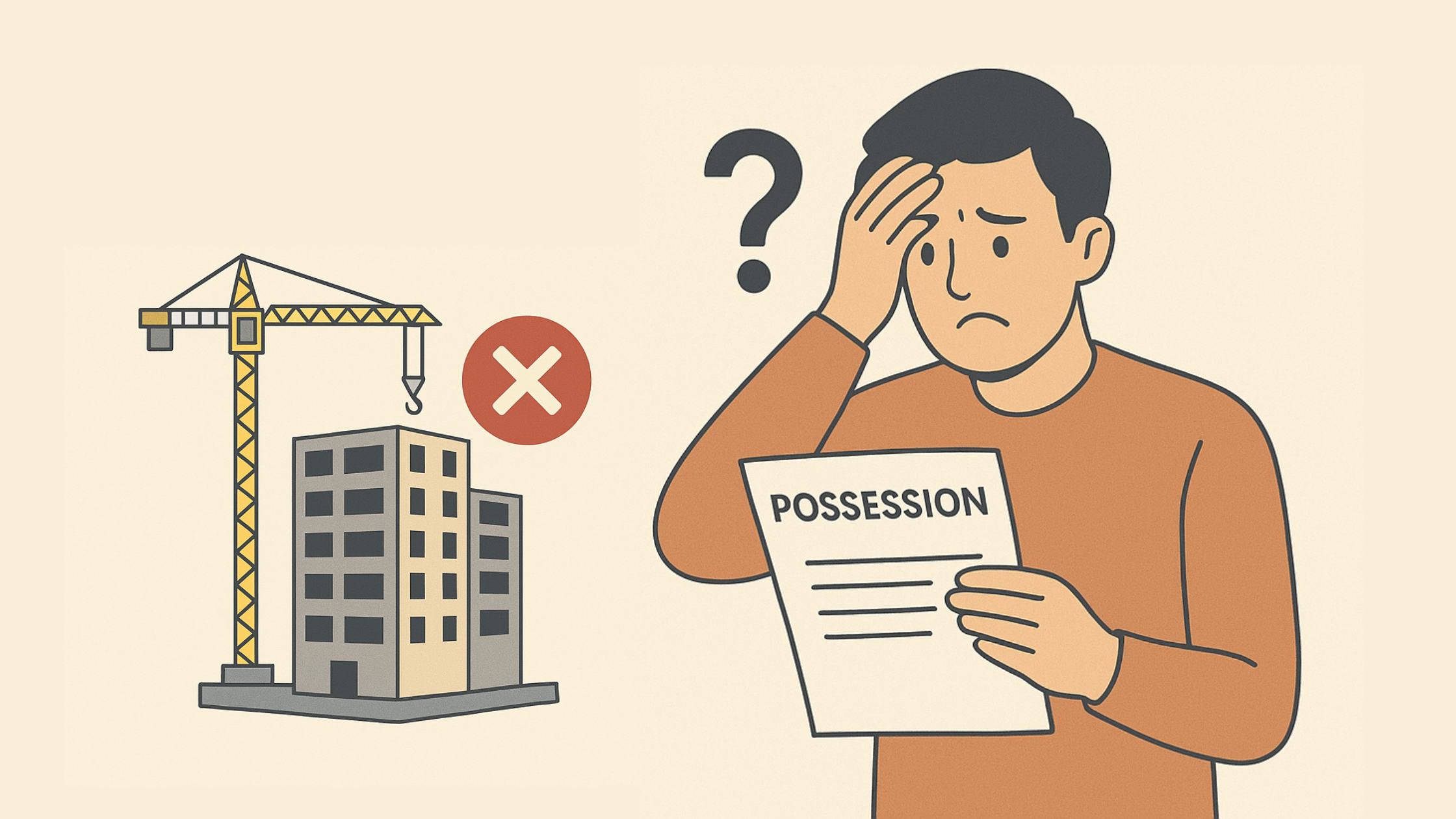
Are you waiting endlessly for the keys to your new home? Or maybe you’re thinking of buying a property but are terrified by stories of delayed projects? That sinking feeling of uncertainty is something no homebuyer should have to live with.
The good news? Indian law now has a powerful shield for you: RERA (Real Estate Regulation and Development Act, 2016). If your project is RERA-registered, you have clear, enforceable rights. Let’s break down exactly what you can do, in simple terms.
First, Know Your Powerful Right: The “Section 18 Choice”
If your builder misses the promised possession date, RERA’s Section 18 gives you a straightforward, two-way choice. You are in the driver’s seat.
Choice 1: Exit & Get a Full Refund
- What it is: You can cancel your booking and exit the project.
- Your Right: The builder must return every rupee you have paid, plus interest from the date of each payment until the refund date.
- Good for: Buyers who have lost confidence in the builder or need their capital back urgently.
Choice 2: Stay & Get Paid for the Delay
- What it is: You choose to wait for the apartment.
- Your Right: The builder must pay you interest for every month of delay until they finally hand over possession.
- Good for: Buyers who still want the home but want the builder penalised for the wait.
The Interest Rate? It’s set by RERA and is typically quite high (like the State Bank’s MCLR rate + 2%), to make delays costly for the builder.
The Builder’s “Force Majeure” Excuse: Is It Valid?
Builders often blame “force majeure” – unpredictable events like pandemics or natural disasters. Here’s the truth:
- It’s not an automatic free pass. The builder must prove to RERA that the event directly caused the delay.
- They must have informed RERA and all buyers officially.
- Even if RERA grants an extension, your right to a refund after this extended period remains intact.
Your Action Plan: A Step-by-Step Guide
If you’re facing a delay, don’t just wait. Follow these steps:
Step 1: Get Your Documents in Order
Gather your Agreement for Sale, all payment receipts, bank statements, and any communication with the builder. This is your evidence kit.
Step 2: Send a Formal Legal Notice
Before filing a complaint, have a lawyer send a legal notice to the builder. This formally states your grievance and your demand (refund or interest), and often pushes them to respond.
Step 3: File a Complaint on Your State RERA Website
This is your main legal tool. The process is designed to be online and buyer-friendly.
- Go to your state’s RERA website (e.g., MahaRERA, UPRERA).
- Register and file a complaint (usually in ‘Form A’).
- Clearly state your chosen remedy under Section 18.
- Upload all your documents and pay a small filing fee (usually between ₹1,000-₹5,000).
- RERA aims to resolve cases within 60-120 days.
What if the Builder Ignores the RERA Order?
This is a common fear. RERA has teeth:
- You can apply for execution of the order.
- RERA can direct local authorities to recover your money as land revenue (like unpaid tax), which can lead to the builder’s assets being attached or auctioned.
- Willful non-compliance can even lead to penalties or imprisonment for the builder.
A Quick Note on Tax: The interest you receive from the builder is considered taxable income. Consult a CA when you receive a large sum to plan your taxes correctly.
How Smart Buyers Avoid the Problem Altogether: Good Practices
The best fight is the one you avoid. Here’s what reputable developers and consultants do to ensure transparency and safety:
Good Developer Practices (What to Look For):
- Clear & Honest Timelines: Promising realistic possession dates and providing regular, genuine progress updates.
- Financial Discipline: Using funds from one project only for that project, not diverting them—a key RERA rule.
- Proactive Communication: Informing buyers upfront about any genuine delays and the revised plan.
- Quality & Compliance Focus: Ensuring all approvals (Title, Building Plan, OC) are in place and construction quality is not compromised for speed.
How Prosperse.in, As Your RERA-Registered Consultant, Embeds These Practices:
At Prosperse, we believe your investment should bring peace of mind, not anxiety. Here’s how we safeguard your journey:
Step 1: Rigorous Project & Builder Verification
We don’t just show you properties. We do deep due diligence:
- Analyze the builder’s financial health and past track record of delivery.
- Scrutinize the RERA registration and all legal approvals.
- Verify title documents and construction approvals to ensure everything is in order.
Step 2: Transaction Transparency & Documentation
We ensure there are no hidden surprises.
- Help you understand every clause of the Builder-Buyer Agreement.
- Ensure all promises are documented and your payments are linked to construction milestones as per RERA norms.
- Maintain clear records of all communications.
Step 3: Continuous Project Monitoring & Advocacy
We act as your independent watchdog throughout the construction phase.
- Monitor project progress against published RERA timelines.
- Facilitate clear communication channels between you and the developer.
- If red flags appear, we advise you early on your options and rights.
Step 4: Support in Case of Disputes
If things go off track, we guide you through the resolution process.
- Help you draft and send the initial legal notice.
- Assist in compiling the strong documentation needed for a RERA complaint.
- Guide you on the strategic choice between seeking a refund or possession with interest.
Buying a home is a milestone. You shouldn’t have to become a legal expert to protect it. RERA gives you the law, and a partner like Prosperse gives you the clarity and guidance to use it effectively.
Still have questions about a delayed project or worried about your next purchase?
Let’s talk. We can review your documents, explain your options, and help you build a plan that puts you back in control.
Most Asked Question:
What is RERA, and how does it protect me?
RERA (Real Estate Regulation and Development Act, 2016) is a law that regulates the real estate sector. It protects you by making it mandatory for projects to be registered, ensuring transparency in advertising, preventing fund diversion, and giving you clear legal remedies for issues like delay.
Does RERA apply to all projects?
RERA applies to all new and ongoing residential and commercial real estate projects that are over 500 sq. meters or have more than 8 apartments. Always check the RERA registration number of a project before booking.
What is the most important right I have if my project is delayed?
Your most powerful right is under Section 18 of RERA. It gives you a clear choice: (A) Get a full refund with interest, or (B) Stay in the project and get monthly interest for the delay period.
My project is delayed. What should I do first?
First, send a formal written notice (a legal notice is best) to the builder, stating the delay and demanding your chosen remedy (refund or interest). Then, file a complaint on your state’s RERA website. Don’t wait indefinitely.
How do I file a RERA complaint?
It’s an online process:
Go to your state RERA portal (e.g., MahaRERA, UPRERA).
Register as a complainant.
Fill Form ‘A’, state your case, and upload documents (Agreement, receipts, notices).
Pay a small filing fee. The authority aims to resolve cases in 60-120 days.What documents do I need to file a complaint?
Sale Agreement/Allotment Letter
All Payment Receipts
Copy of the Legal Notice sent to the builder
Builder’s communication about the delay
Your and the project’s RERA registration details.How can Prosperse.in help me avoid delayed projects?
As your RERA-registered consultant, we conduct thorough due diligence before recommending any project. We check the builder’s track record, financial health, and legal approvals to minimize your risk from the start.
Disclaimer: This article is for informational purposes only and does not constitute legal advice. For specific legal guidance on your situation, please consult with a qualified legal professional.